My House Was Tracking 1,775 Things That No Longer Existed
 Kyle Prins
Before I could dive into my lab, I needed to get it healthy, and that meant fixing the smart home first. Remember, the most important KPI in this house is the WAF.
Step one was the boring one, but the most necessary. Given how fast exploits get released these days, I wanted everything updated as quickly as possible. Home Assistant was three releases behind. I took a full backup before every risky step, updated it, and then went looking at what was actually in there. Spoiler: a lot of nothing.
The count
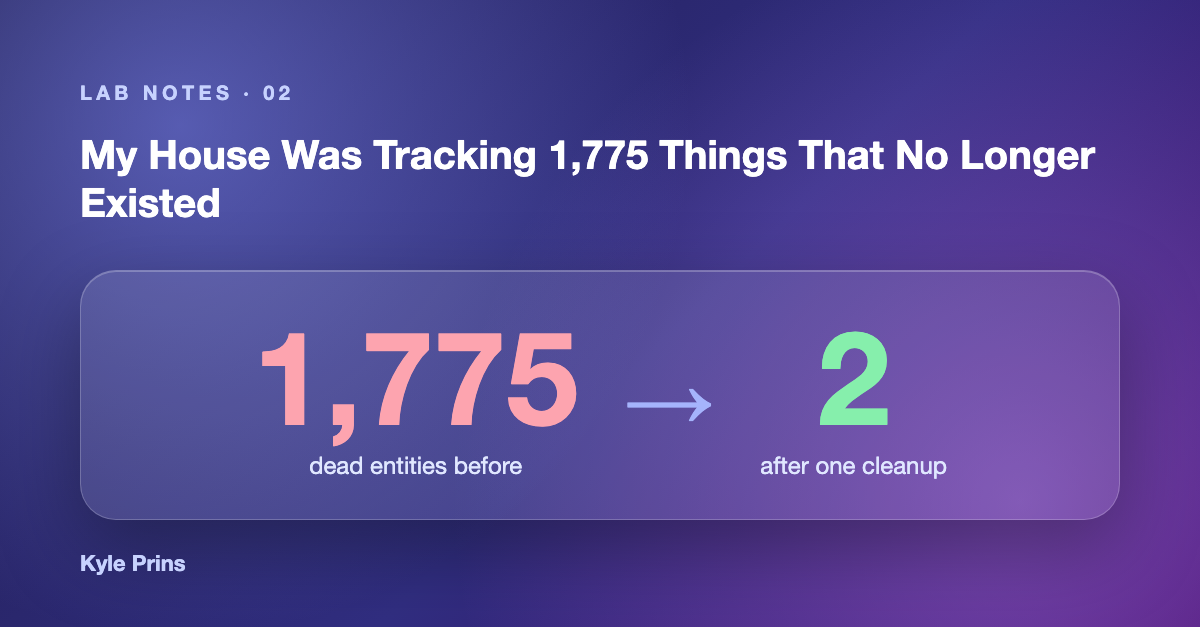
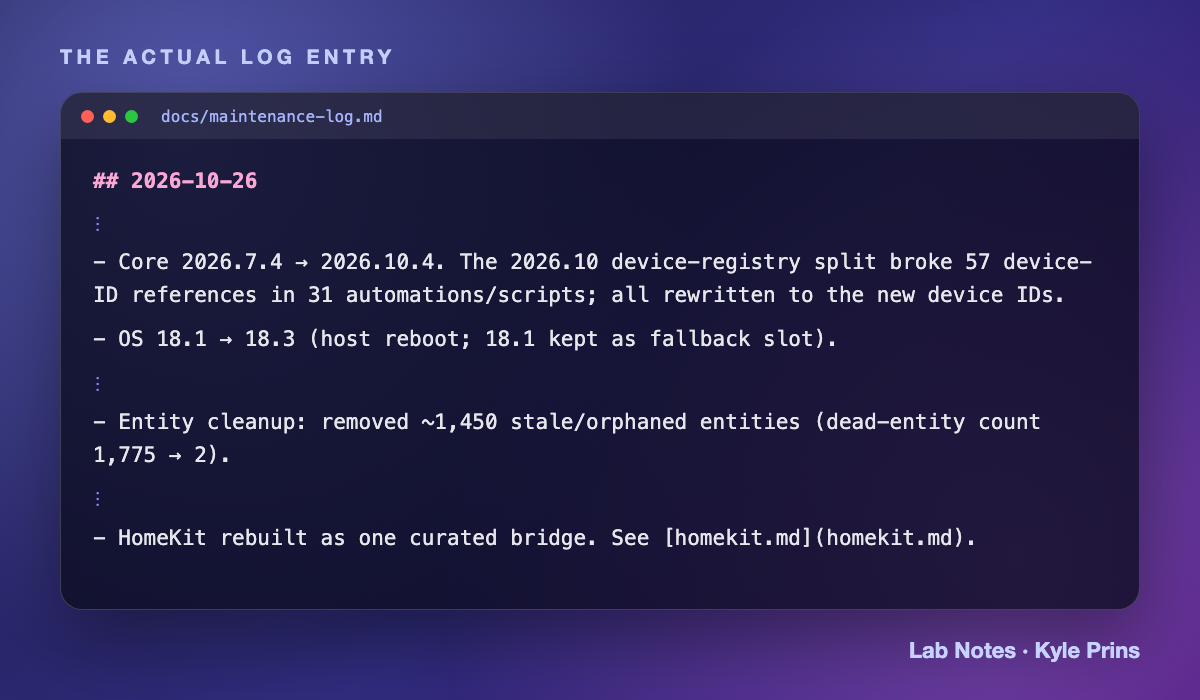
1,775 dead entities. Stale and orphaned, all of them. Integrations for an old phone, a universal remote hub and an IR blaster. Seven camera bridges that were either dead or had never been paired in the first place. My house had been faithfully keeping a list of things that didn’t exist anymore.
I removed about 1,450 entities and a pile of dead integrations. When the dust settled, the dead count was 2.
That order mattered more than I knew. Three days later, Home Assistant started sending every state change to the Splunk instance in my home lab. So the index started with the house that actually exists, not 1,775 ghosts.
The upgrade’s little gift
The new release changed how devices are registered, and that broke 57 references across 31 automations and scripts. Every one of them pointed at a device by its internal device ID. I patched them that day, then moved them to entity IDs the next day so the next registry change won’t do it again.
Inventory first. Indexing second. Bragging third.
How many dead entities is your setup carrying? I bet it’s more than you think. Tell me in the comments.
-Kyle